
A wound that won't heal is a message. We read it, then heal it.
Dr Bakshi Clinic runs a specialized wound care service in Bhopal for diabetic foot ulcers, bedsores, post-surgical wounds, and other chronic non-healing lesions — combining stage-appropriate advanced dressing, infection control, and crucially, treatment of the blood sugar and arterial circulation problems that keep wounds open. Clinic OPD visits or scheduled sterile dressing at home.
Why wounds refuse to heal
Skin wants to close; when it doesn't, something is actively stopping it. In Bhopal, the usual suspects are uncontrolled sugar, impaired circulation, unrelieved pressure, hidden biofilm infection, and harsh dressing technique.
Uncontrolled Blood Sugar
Elevated glucose paralyzes white blood cell phagocytosis and fuels deep bacterial proliferation.
Compromised Arterial Perfusion
Microvascular narrowing deprives regenerating skin of oxygen, micronutrients, and healing factors.
Constant Unrelieved Pressure
Body weight compressing skin over bony prominences blocks capillary blood supply (bedsores).
Sub-Crust Bacterial Biofilm
Microbial colonies shield themselves under slough and dead tissue, resisting topical ointments.
Traumatic Dressing Methods
Dry gauze adhering to healing wound beds tears away newly formed delicate granulation tissue weekly.
A wound open beyond two or three weeks has a reason.
Treating the root cause — not just re-bandaging the outer surface — is the entire discipline of modern wound care.
Why our service lives inside a physician's clinic: The dressing hand and the prescribing hand belong to the exact same clinical team.
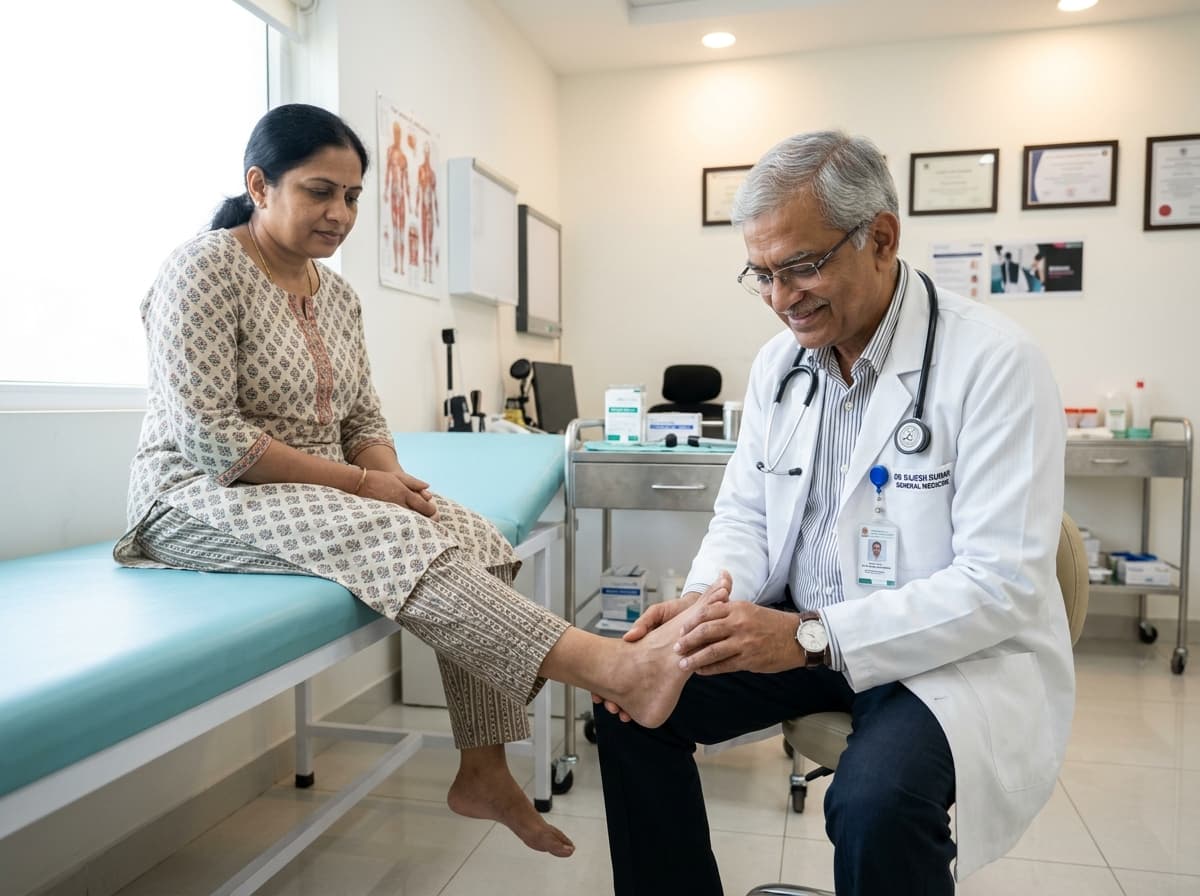
The diabetic foot: read this if you have sugar
Diabetes numbs the feet, narrows their blood supply, and slows every repair. A blister from new footwear, a nail cut too deep, or a coin-sized sore under the big toe — things a healthy foot shrugs off — can, in a diabetic foot, run quietly toward deep infection, bone involvement, and the amputations that fill surgical wards. Most of those amputations began as a small wound someone watched for three weeks.
Our rule for diabetic patients is blunt: any foot wound not clearly healing within ten days gets seen, that week. Bring the sugar file with the foot; they are the exact same case.
Never watch a diabetic foot sore past 10 days. Early clinic debridement and offloading halts osteomyelitis.
Physician insulin & medication adjustments targeting fasting glucose <130 mg/dL to empower cellular phagocytosis.
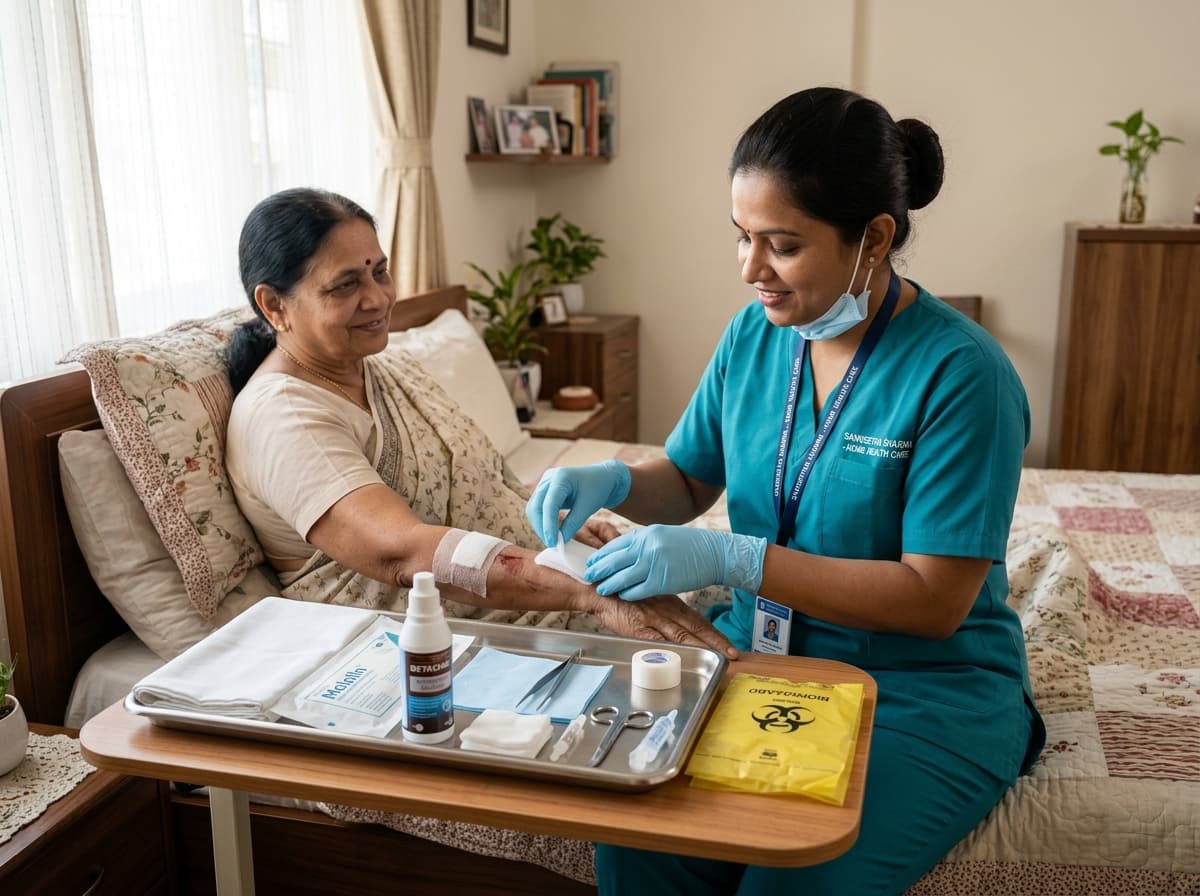
Trained nurses provide gentle, advanced dressings at home across Bhopal with serial digital photo tracking.
Between visits, our home nurses handle sterile dressings and Dr. Raja Bakshi manages the glycemic control protocol that decides whether the wound closes.
What the wound care service includes
A comprehensive medical, metabolic, and nursing ecosystem dedicated to closing non-healing wounds across Bhopal:
Comprehensive Staging & Perfusion
Wound depth staging (Grade 1–4), peripheral pulse palpation, capillary refill analysis, and systemic screening (HbA1c, Serum Albumin, ESR/CRP).
Advanced Stage-Appropriate Dressings
Modern hydrocolloids, silver foam dressings, alginates, and non-adherent silicone meshes changed on schedule at clinic or patient doorstep.
Targeted Infection Control & Drainage
Wound swab microbiology cultures, culture-directed systemic antibiotic prescribing, and sterile minor bedside drainage before cellulitis spreads.
Pressure Offloading & Bedside Turning
For bedsores and plantar ulcers: specialized air mattress setups, written 2-hour positional turning charts, and offloading foam boots.
Systemic Healing Environment
Tight diabetes stabilization, high-biological-value protein supplementation, and smoking cessation counseling — the crucial 60% of wound closure.
Fast-Track Surgical Escalation
Wounds requiring deep surgical debridement, negative pressure wound therapy (VAC), vascular bypass, or skin grafting referred with complete photo files.
Bedsores: prevention is a schedule, healing is a system
For bedridden patients, a bedsore is not bad luck — it's arithmetic: pressure on one patch of skin for too many consecutive hours.
Our home-care wing prevents bedsores with specialized alternating air mattresses and written turning schedules; when a sore already exists, healing requires staging, pressure offloading, clinical nutrition, and disciplined sterile dressings together.
Families who have battled a deep bedsore know it's a months-long campaign. We run those campaigns properly, and we'd far rather be called at stage one than stage four.
Alternating pneumatic pressure ripples continually relieve capillary occlusion over the sacrum, trochanters, and heels.
A disciplined, written bedside schedule ensuring 30-degree lateral tilts around the clock without shear injury.
Treating non-blanchable redness and early tissue bogging immediately avoids devastating deep cavitary ulcerations.
Frequently asked questions
Doctor-curated answers regarding non-healing wound timelines, diabetic foot urgency, home nursing dressings, bedsore prevention, and surgical debridement.
Minor wounds close within one to two weeks. Anything still open at two to three weeks — or growing, smelling, or more painful — is a non-healing wound with a cause that needs finding. Don't extend the wait-and-watch; the wait is what deepens it.
Talk to us today
Call or WhatsApp +91 97551 08769, or walk in this evening — 7:00 PM to 9:00 PM, Monday to Saturday, R-32, Zone-1, M.P. Nagar, Bhopal.